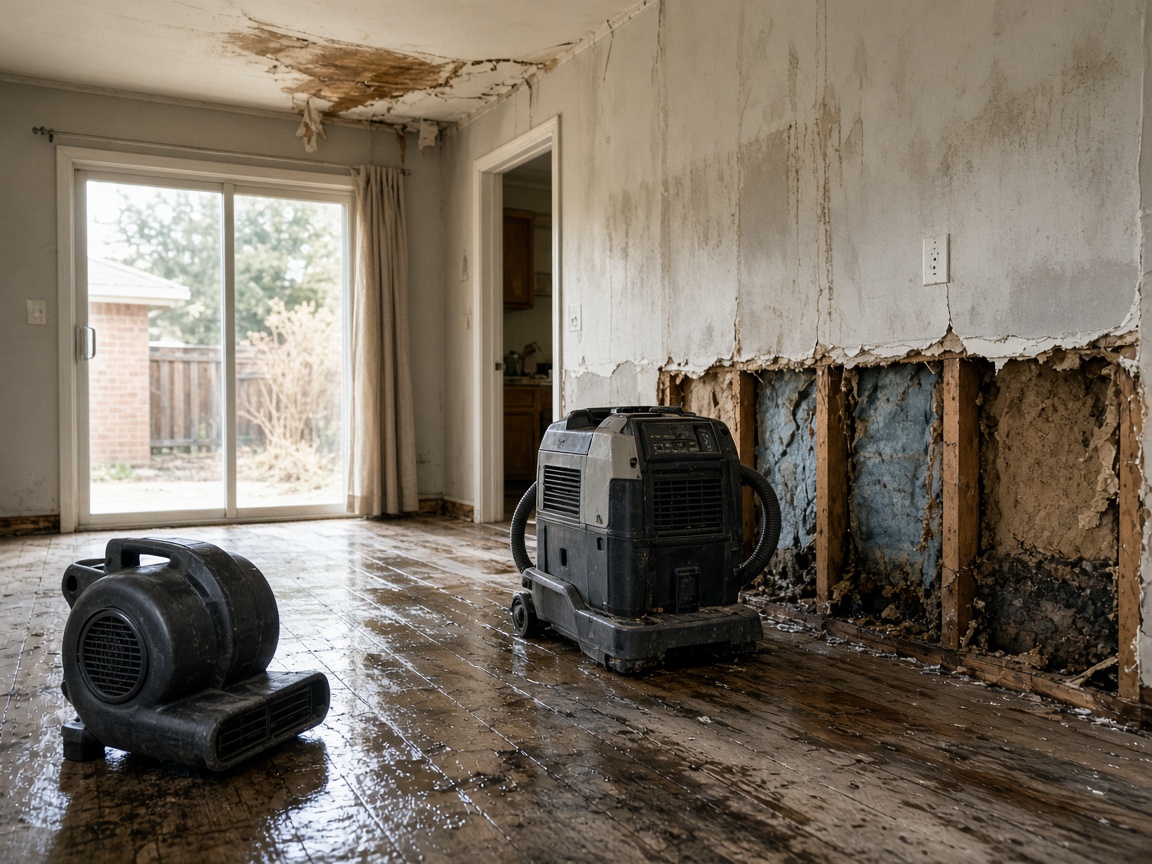
Seagraves sits on the western edge of Lubbock with older single-story homes on larger lots that back up to open fields. High winds often drive rain under eaves and into crawl spaces, while cold winter snaps freeze pipes in the uninsulated sections common to 1960s-1970s builds here. We stage equipment at 7477 County Rd 7000 and reach these properties within the hour to stop further spread into slab edges.
Drainage in Seagraves relies on roadside ditches that fill quickly during storms. When water sits against foundations, it migrates into the sandy loam soil and under slabs. Our crews pull carpet and pad, set air movers, and monitor moisture in the concrete before it reaches nearby homes on the same block.
Access roads like the county routes around Seagraves can get muddy after rain, so we bring four-wheel-drive trucks loaded with portable generators. This keeps dehumidifiers running even when power is out, cutting drying times for affected bedrooms and utility rooms.
Around 34. Seagraves
We regularly work near:
- 📍County Road 7000
- 📍Seagraves roadside drainage ditches
- 📍Western Lubbock field edges bordering Seagraves lots
Water Damage Restoration in 34. Seagraves — Local Notes
- •Flat or low-pitch roofs on Seagraves homes catch wind-driven rain that travels under flashing and into attics during Lubbock's frequent high-wind events.
- •Winter pipe bursts hit older galvanized lines in crawl spaces more often here because many homes lack proper insulation on the north sides exposed to open fields.
- •Clay and sandy loam mix under slabs means water travels laterally; we always check neighboring lots along the same ditch line before finishing a job.
- •Long driveways off County Road 7000 require extra hose length and sometimes generator placement to reach back bedrooms without crossing wet yards.