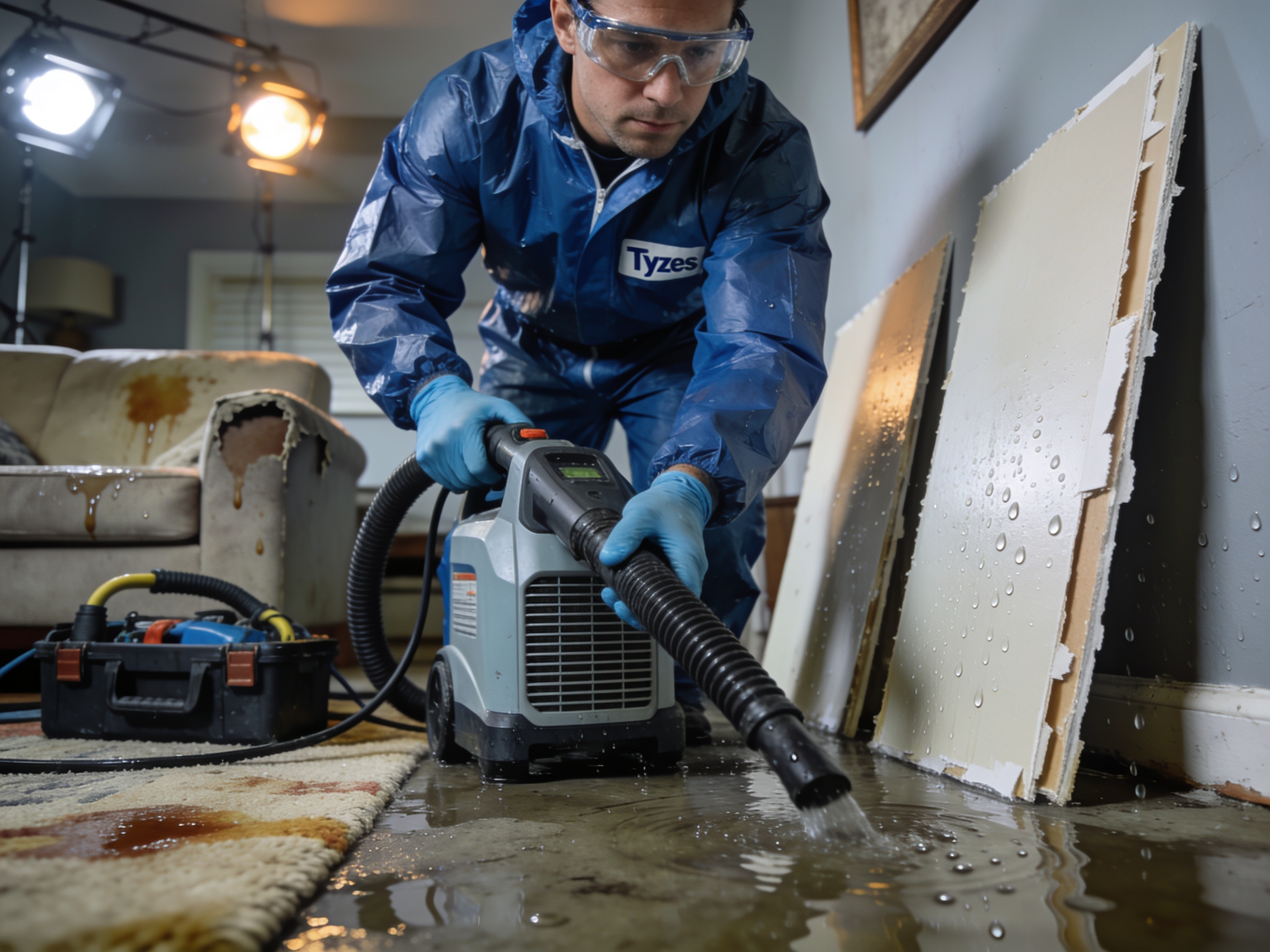
Lubbock's mix of older brick homes in Tech Terrace and post-war builds in South Lubbock means water often travels behind plaster and into crawl spaces before it shows on floors. High winds from spring storms push rain under roof edges and around window frames on houses that predate modern flashing standards. Cold winter nights drop below freezing and split copper or PEX lines in unheated attics common on the north side of town. We pull carpet, cut wet drywall at the right height, and use industrial air movers and dehumidifiers sized for the square footage and local humidity swings rather than generic formulas.
Downtown Lubbock commercial buildings and Tech Terrace rentals frequently have slab leaks that migrate under tile or hardwood because the clay-heavy soil expands and contracts with seasonal moisture changes. After extraction we place moisture meters in multiple wall cavities and under subfloors because trapped water here leads to hidden mold within days when summer temperatures climb back into the nineties. We coordinate with local plumbers for shutoffs and document everything for insurance adjusters who know Lubbock wind and hail claims.
North Lubbock neighborhoods near the county line see more wind-driven rain infiltration through older composition roofs, while homes closer to Texas Tech often have finished basements or lower levels added later that trap water against foundations. We run containment barriers and negative air when sewage or gray water is involved, and we dispose of saturated materials at the county landfill rather than leaving debris on site. Every job ends with a final walkthrough using the same meters to confirm readings match dry standards before we close the file.
Technician insight
In Lubbock the thing that catches most people out with water damage restoration is how fast high winds drive rain under roof edges on the older brick homes in Tech Terrace and North Lubbock; the water travels along rafters into insulation that never gets checked until the ceiling stains appear weeks later.
Tech Terrace Attic Leak
A sudden high-wind storm pushed rain under flashing on a 1960s brick home near Texas Tech. We found water migrating along ceiling joists into cellulose insulation above two bedrooms. Extraction and targeted drying prevented mold while the roof was repaired, and final meter readings confirmed the structure was dry before we left.
Water Damage Restoration Services We Offer
✓Emergency Water Extraction
Rapid removal of standing water from slabs, carpets and crawl spaces using truck-mounted pumps sized for Lubbock's sudden storm inflows.
✓Structural Drying and Dehumidification
Placement of air movers and commercial dehumidifiers calibrated to the area's low humidity swings after initial extraction in older Tech Terrace homes.
✓Mold Prevention After Water Damage
Antimicrobial treatment and moisture mapping of wall cavities and subfloors to stop hidden growth common after high-wind rain events.
✓Drywall and Insulation Removal
Selective demo of wet drywall up to the water line plus removal of saturated insulation in South Lubbock crawl spaces and attics.
✓Carpet and Pad Restoration
Cleaning and drying of salvageable carpet or full replacement when water has wicked into padding in Downtown Lubbock rentals.
Water Damage Restoration Cost in Lubbock, TX
| Service | Typical Range | What Affects It |
|---|---|---|
| Category 1 Water Extraction (per room) | $450–$900 | Clean water only; price rises with square footage and number of affected walls. |
| Full Structural Drying (typical 3-bedroom home) | $1,200–$2,800 | Includes equipment rental and daily monitoring; longer runs in humid summer months increase cost. |
| Drywall Removal And Disposal | $3–$7 per linear foot | Height of cut and disposal fees at Lubbock County landfill affect final total. |
| Carpet Pad Replacement | $1.50–$3.50 per sq ft | Pad only; carpet cleaning or replacement quoted separately. |
Ranges are typical for Lubbock, TX and confirmed with an exact written quote before any work starts.
How it works
- 1
Arrival And Assessment
We arrive at the property, locate the source, and map moisture with meters in walls, floors and ceilings.
- 2
Water Removal
Truck-mounted extraction removes standing water from slabs, carpets and any accessible crawl spaces.
- 3
Drying Setup
Air movers and dehumidifiers are positioned and monitored daily until readings return to normal.
- 4
Demo And Disposal
Wet materials are removed, bagged and taken to the county landfill; containment is maintained throughout.
- 5
Final Verification
Moisture meters confirm dry conditions before equipment is removed and the job is documented for insurance.
Pricing
Pricing varies by affected square footage, water category, and how many wall cavities require opening; we provide written ranges after the initial assessment.