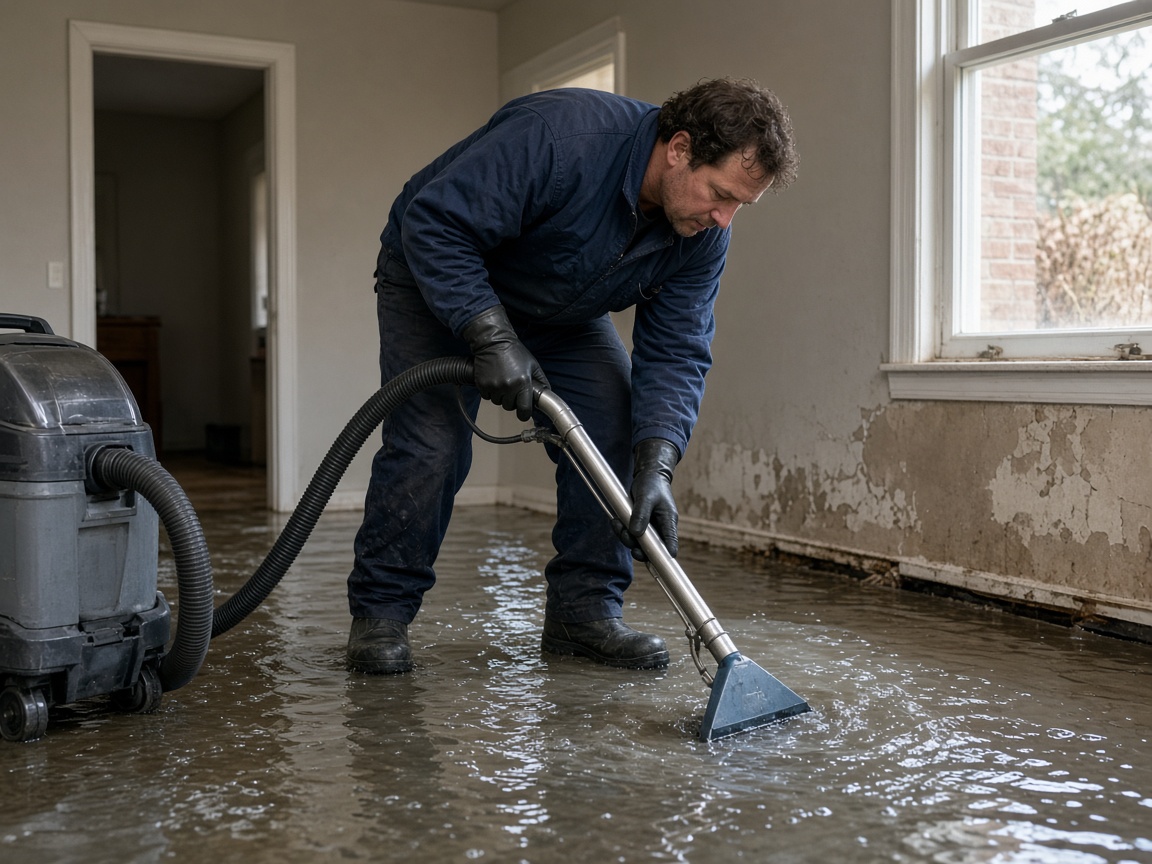
Lubbock homes built before 1980 in Tech Terrace and North Lubbock often have slab foundations and galvanized plumbing that corrodes after decades of the county's hard water. When a supply line bursts, water travels under the slab and wicks into drywall and base plates within hours. Our crews use moisture meters and thermal imaging to trace the full path before any extraction begins so hidden pockets do not later cause mold under flooring.
High winds common to the South Plains regularly tear shingles on older roofs in Downtown Lubbock and near the Buddy Holly Center. Rain then pools in attics and soaks insulation and ceiling joists. We stage portable extractors on the second floor when needed and pump water directly into street drains rather than through finished living spaces to avoid tracking contaminants across carpet and hardwood.
Winter freezes hit South Lubbock and Amarillo-bound corridors hardest because many homes lack adequate pipe insulation. A single split line can release hundreds of gallons before the homeowner returns from work. We isolate the break, remove standing water from crawl spaces that sit only inches above the high water table, and set drying equipment that accounts for the area's low humidity once temperatures rebound.
Commercial spaces near Texas Tech University experience frequent AC condensate overflows during the long hot summers. Water migrates under raised computer flooring and into server rooms. Extraction must finish before electrical shutdowns occur, so we coordinate with building maintenance to maintain power while using submersible pumps rated for continuous duty.
Technician insight
In Lubbock the thing that catches most people out with Emergency Water Removal is how fast water travels under the flat slab foundations common in Tech Terrace and older North Lubbock blocks; once it reaches the perimeter it can re-enter the house through weep holes days after the initial leak appears fixed.
Tech Terrace Pipe Burst
A galvanized line under a 1960s slab split overnight. Water migrated into the living room and two bedrooms before the homeowner noticed. We mapped moisture under the tile, extracted 180 gallons, opened base plates for airflow, and returned daily until readings stabilized. The home dried without mold growth and the owners avoided full floor replacement.
Emergency Water Removal Services We Offer
✓Burst Pipe Water Extraction
Locate and isolate the line, then extract water from slabs and walls before it reaches neighboring units in multi-family buildings.
✓Roof Leak Extraction
Remove pooled attic water and saturated insulation after high-wind damage common along the Lubbock plain.
✓Appliance Leak Cleanup
Pull water from under refrigerators, washers, and dishwashers before it migrates into adjacent cabinetry in South Lubbock kitchens.
✓Basement and Crawl Space Pumping
Clear standing water from below-grade areas where the shallow water table meets older foundation walls.
✓Storm and Wind-Driven Rain Removal
Extract rainwater that enters through compromised windows and doors after Lubbock's frequent spring and summer storms.
Emergency Water Removal Cost in Lubbock, TX
| Service | Typical Range | What Affects It |
|---|---|---|
| Emergency Extraction Visit | $250–$650 | First two hours on site; larger volumes or multi-story homes increase time. |
| Per Square Foot Extraction | $3–$7 | Applies after bulk water is removed; carpet pad and hardwood add cost. |
| Crawl Space Or Attic Pump-Out | $400–$900 | Access difficulty and debris load move the upper end. |
| Daily Equipment Rental | $75–$150 | Per drying zone; longer runs needed in Lubbock's humid summer months. |
Ranges are typical for Lubbock, TX and confirmed with an exact written quote before any work starts.
How it works
- 1
Arrival And Safety
We arrive within the posted hours, shut off water if still flowing, and set containment to protect unaffected rooms.
- 2
Moisture Mapping
Technicians use meters and infrared cameras to chart every wet material in homes from Tech Terrace to North Lubbock.
- 3
Water Extraction
Submersible pumps and truck-mounted units remove bulk water from slabs, carpets, and wall cavities.
- 4
Initial Drying Setup
Air movers and dehumidifiers begin the drying process while we document conditions for insurance.
- 5
Daily Monitoring
Return visits adjust equipment until moisture readings return to normal levels for the local climate.
Pricing
Cost depends on water volume, number of affected rooms, and whether hidden cavities require opening walls.