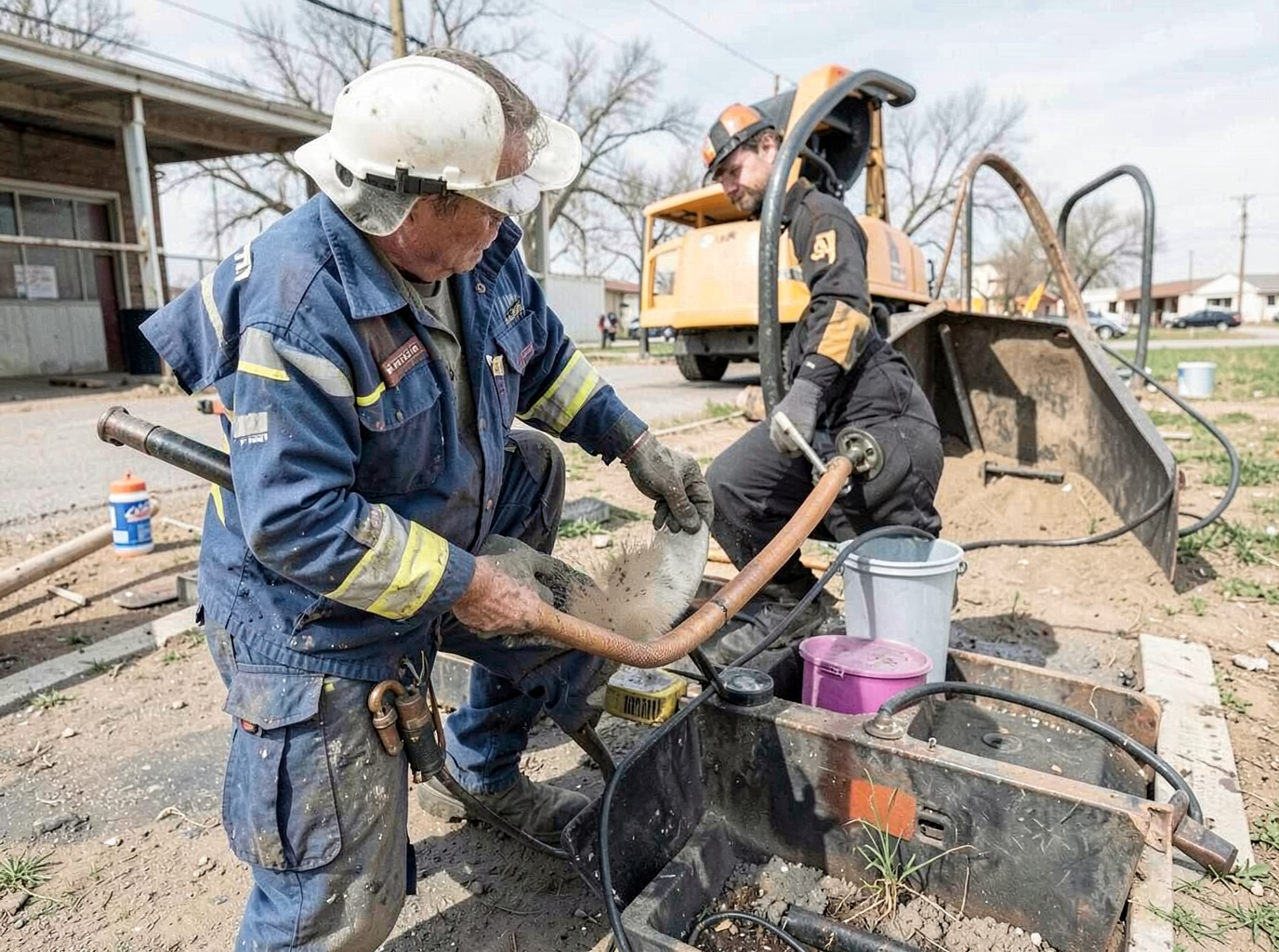
Lubbock’s high winds regularly drive rain under roof edges and around window seals in older Tech Terrace and Downtown homes built before the 1980s. Once water reaches plaster or lathe walls, it travels horizontally along the studs faster than in newer construction, so extraction must start at the base plates and move upward. Cold winter nights below freezing turn small roof leaks into ice dams that release sudden volumes when temperatures rise, saturating insulation in attics above North Lubbock ranches. Crews arriving from the County Rd 7000 shop carry moisture meters calibrated for the region’s clay-heavy soils that hold water against foundations longer than sandy ground farther south toward Midland.
Summer heat above 100 degrees accelerates mold growth on wet drywall within 48 hours, especially in South Lubbock crawl spaces with poor ventilation. After extraction, dehumidifiers must run longer than in drier climates like Abilene to pull moisture from the soil-adjacent framing. Sewage backups from overloaded municipal lines during heavy rain events require full containment barriers and antimicrobial application before any drying begins, because the alkaline soil here reacts with certain cleaners and leaves residue on concrete slabs. Homeowners in these neighborhoods often discover hidden damage only after the first cold snap causes pipes to freeze again in already compromised walls.
Technicians document every step with photos because Lubbock County insurance adjusters require proof that affected materials were removed rather than simply dried in place. This matters in 1950s-era homes near the Buddy Holly Center where original hardwood floors sit directly on grade and absorb water differently than modern floating floors. Equipment placement must account for the frequent 30-plus mph winds that can push drying fans off balance on rooftops during roof-leak jobs.
Technician insight
In Lubbock the thing that catches most people out with Emergency Water Damage Restoration is how quickly wind-driven rain soaks the paper backing on drywall in 1960s Tech Terrace homes; once it reaches the studs the damage spreads horizontally along the base plate within hours, and you cannot simply dry it in place without pulling the bottom two feet of wall.
Frozen Pipe Failure in South Lubbock
A kitchen supply line froze overnight and burst behind the cabinets. Water traveled under the slab edge into the adjacent hallway. Extraction removed standing water the same day, drying equipment ran for four days, and only the lower cabinets and affected drywall needed replacement.
Emergency Water Damage Restoration Services We Offer
✓Burst Pipe Water Extraction
Rapid removal of standing water from frozen or corroded pipes common in Lubbock’s older neighborhoods during winter temperature swings.
✓Storm and Wind-Driven Leak Drying
Targeted drying after high winds force water under roofs or around windows, focusing on attics and wall cavities in Tech Terrace and North Lubbock homes.
✓Sewage Backup Cleanup
Full containment and removal of contaminated water from municipal line backups that occur during heavy rains in South Lubbock and Downtown areas.
✓Crawl Space Water Removal
Extraction and drying beneath homes where clay soils retain moisture against foundations, preventing long-term structural issues.
✓Attic Insulation Replacement
Removal of water-saturated insulation after roof leaks and installation of new material rated for Lubbock’s extreme temperature swings.
Emergency Water Damage Restoration Cost in Lubbock, TX
| Service | Typical Range | What Affects It |
|---|---|---|
| Category 1 Clean Water Extraction | $600–$1,800 | Depends on gallons removed and number of rooms affected |
| Category 3 Sewage Cleanup | $1,400–$3,200 | Includes containment and disposal, higher in crawl spaces |
| Full Structural Drying | $800–$2,500 | Daily equipment rental plus monitoring visits |
| Attic Insulation Removal And Replacement | $1,100–$2,800 | Based on square footage and access difficulty |
Ranges are typical for Lubbock, TX and confirmed with an exact written quote before any work starts.
How it works
- 1
On-Site Assessment
Technician arrives within hours, maps moisture with meters, and identifies affected materials in walls, floors, and attics specific to the home’s age and location.
- 2
Water Extraction
Portable and truck-mounted pumps remove standing water, followed by immediate containment to protect unaffected rooms.
- 3
Drying And Dehumidification
Industrial air movers and dehumidifiers run until moisture readings return to normal, with daily monitoring to adjust for Lubbock’s wind and temperature changes.
- 4
Material Removal And Sanitation
Damaged drywall, insulation, and flooring are removed, surfaces treated, and the site prepared for reconstruction.
Pricing
Pricing varies by water volume, affected square footage, and whether sewage or mold is present. Upfront written estimates provided during the initial visit.