2026-11-11 · Dale Harper
How to Spot Hidden Water Damage in Lubbock Slab Foundations After Heavy Rain
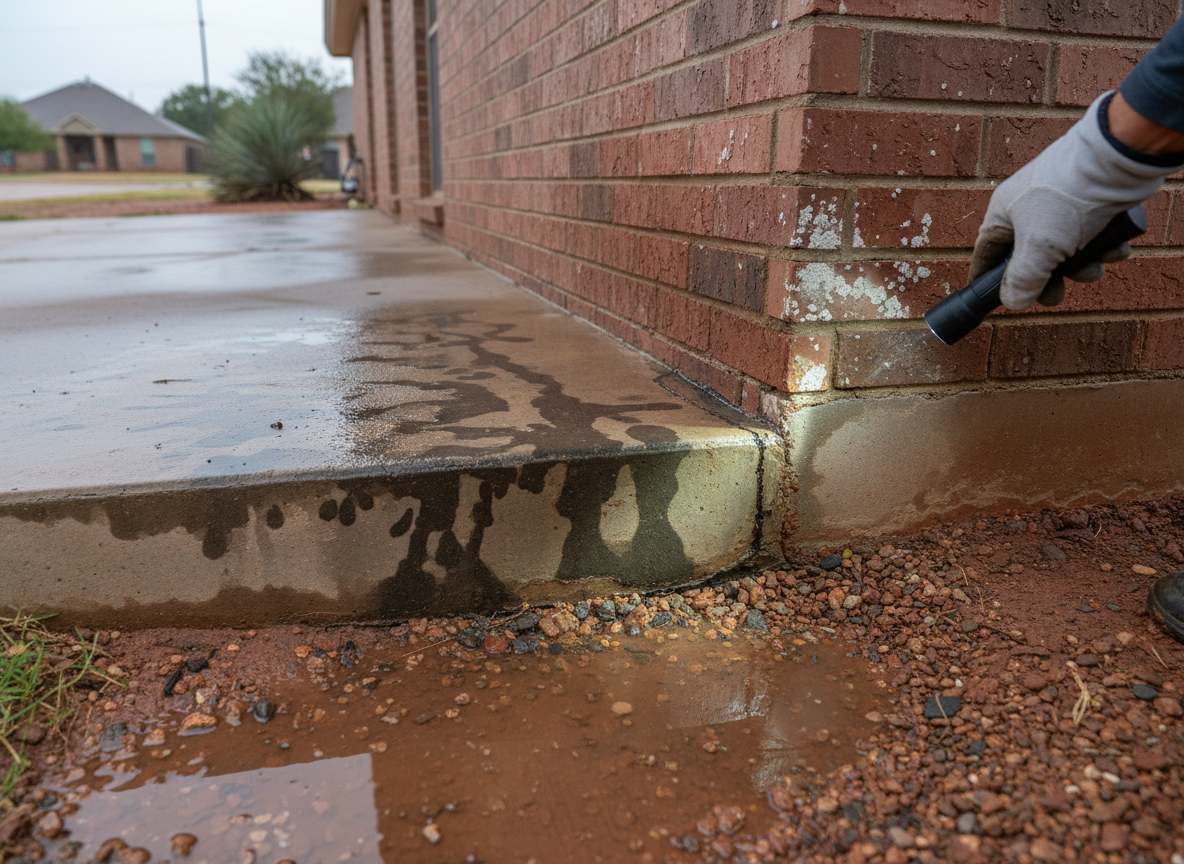
After heavy rain in Lubbock, check for uneven floors, musty odors near baseboards, and small cracks widening in drywall within 2–4 weeks. These early indicators often point to water trapped beneath slab foundations common in neighborhoods like Tech Terrace and South Lubbock where clay soils expand and contract with moisture swings.
How Lubbock Weather and Soil Create Slab Problems
Lubbock receives sudden downpours that drop 2–4 inches in a few hours during spring and fall, while hot summers dry the ground quickly and cold winters add freeze-thaw cycles. The high winds common here push rain against foundation edges and into low spots around older homes built on expansive clay in Downtown Lubbock and North Lubbock. This combination forces water under the slab where it stays trapped because the soil holds moisture longer than sandy ground found farther west toward Midland or Abilene. Over time the trapped water softens the subgrade and lifts sections of the slab, producing the hairline cracks and shifting that homeowners notice first in door frames or tile grout lines.
Visual Checks Inside the Home
Start in rooms with plumbing near exterior walls and look for discoloration on carpet edges or baseboards that darkens after rain events. Run your hand along the lower 12 inches of sheetrock; cool or damp spots indicate moisture wicking upward from the slab. In bathrooms and kitchens, examine the caulk where the floor meets the tub or cabinets for separation or dark staining that returns within days of cleaning. Pay extra attention in homes near Texas Tech University or the Buddy Holly Center where many 1960s–1980s slab homes sit on lots with poor drainage grading. These visual signs usually appear before any standing water shows on the surface.
Tools for Spotting Hidden Moisture
Use a moisture meter on the floor and lower walls; readings above 15 percent in concrete or wood framing signal trapped water that needs attention. A thermal camera reveals cooler patches under tile or carpet that stay hidden to the eye, especially useful after the high winds of a storm have dried the visible surfaces. Check exterior grading around the foundation for low spots that hold water against the slab edge for more than 48 hours. Homeowners in areas like South Lubbock often find these low spots near driveways or AC condensate lines that were never re-graded after original construction.
When Slab Damage Requires Professional Assessment
If meter readings stay elevated after 72 hours of dry weather or new cracks appear in the slab itself, contact a Water Damage Restoration team familiar with Lubbock clay soils. Persistent musty smells or recurring efflorescence on the slab surface also indicate water moving through the foundation from below. For cost expectations tied to different damage types, review Typical Water Damage Restoration Costs for Lubbock Homes by Damage Type. Early detection prevents the need for larger Water Damage Repair jobs later when mold or structural shifting sets in.
Seasonal Timing for Inspections
Schedule checks in late spring after the first heavy rains and again in early winter before temperatures drop, since Lubbock winters can freeze residual moisture under the slab and worsen cracks. Homes in Levelland or Shallowater that experience the same regional weather patterns show the same slab issues, confirming the pattern holds across the county. Consistent monitoring catches problems while they remain limited to the sub-slab layer rather than spreading into finished living spaces.